 Tighter emission limits and rising expectations on environmental performance make flue gas cleaning a core part of modern power generation and industrial combustion. Whether the fuel is coal, biomass, waste-derived fuels, or natural gas, engineers must control particulates, SO₂/acid gases, NOₓ, and selected trace pollutants—often under variable loads and changing fuel quality. Reliable process and performance models support sound technology selection, robust design, and stable operation across the full operating range.
Particulate control (dust removal)
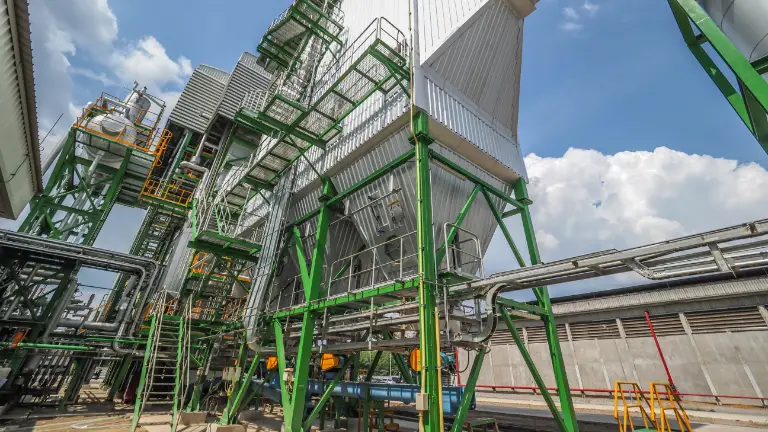
Particulate matter is typically removed using electrostatic precipitators (ESPs) or fabric filters (baghouses). Key considerations include collection efficiency versus particle size distribution, flue gas temperature and moisture, resistivity effects (for ESPs), filter loading behavior, and the impact of pressure drop on fan duty.
Desulfurization and acid gas removal (SO₂, HCl, HF)
Flue Gas Desulfurization (FGD) systems reduce sulfur and acid gas emissions using wet or dry processes. Wet limestone/gypsum scrubbing, semi-dry spray dryer absorbers, and dry sorbent injection each involve different trade-offs in water use, byproduct formation, corrosion risk, and achievable removal rates—especially during load changes.
NOₓ reduction (SCR and SNCR)
Selective Catalytic Reduction (SCR) and Selective Non-Catalytic Reduction (SNCR) reduce NOₓ by injecting ammonia or urea within defined temperature windows. Performance depends on temperature profiles, residence time, catalyst activity and aging, ammonia slip, and interactions with upstream/downstream equipment (e.g., air preheaters and particulate capture).
Trace pollutants and polishing steps
Depending on fuel composition and permitting requirements, additional measures may be required for mercury, dioxins/furans, and other trace contaminants. Typical solutions include activated carbon injection, dedicated reagent selection and dosing control, and polishing stages coordinated with particulate and acid gas removal.
Integrated design and operation
Flue gas cleaning is tightly coupled to plant operation: heat integration shapes temperature levels and condensation risk, pressure losses influence fan requirements, and upstream combustion settings affect pollutant formation. A plant-wide model helps quantify these interactions and supports consistent setpoints across operating scenarios—particularly for retrofits and flexible operation.
Performance models
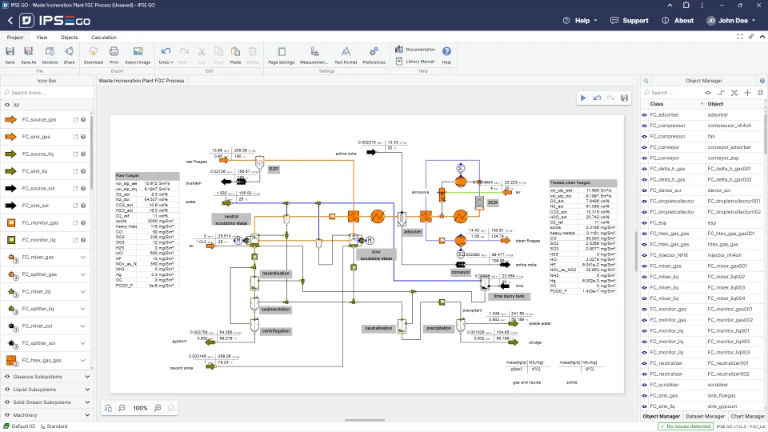
Accurate performance models help you compare configurations, predict emissions across load ranges, and validate control strategies under changing boundary conditions. IPSEproprovides a robust platform for building flue gas cleaning performance models and integrating them with complete plant heat and mass balances—supporting both early-stage design and detailed operational studies. Use the Flue Gas Cleaning Library to represent key unit operations and connect them into consistent, plant-wide flowsheets—enabling scenario analysis and sensitivity studies aligned with your compliance targets.